
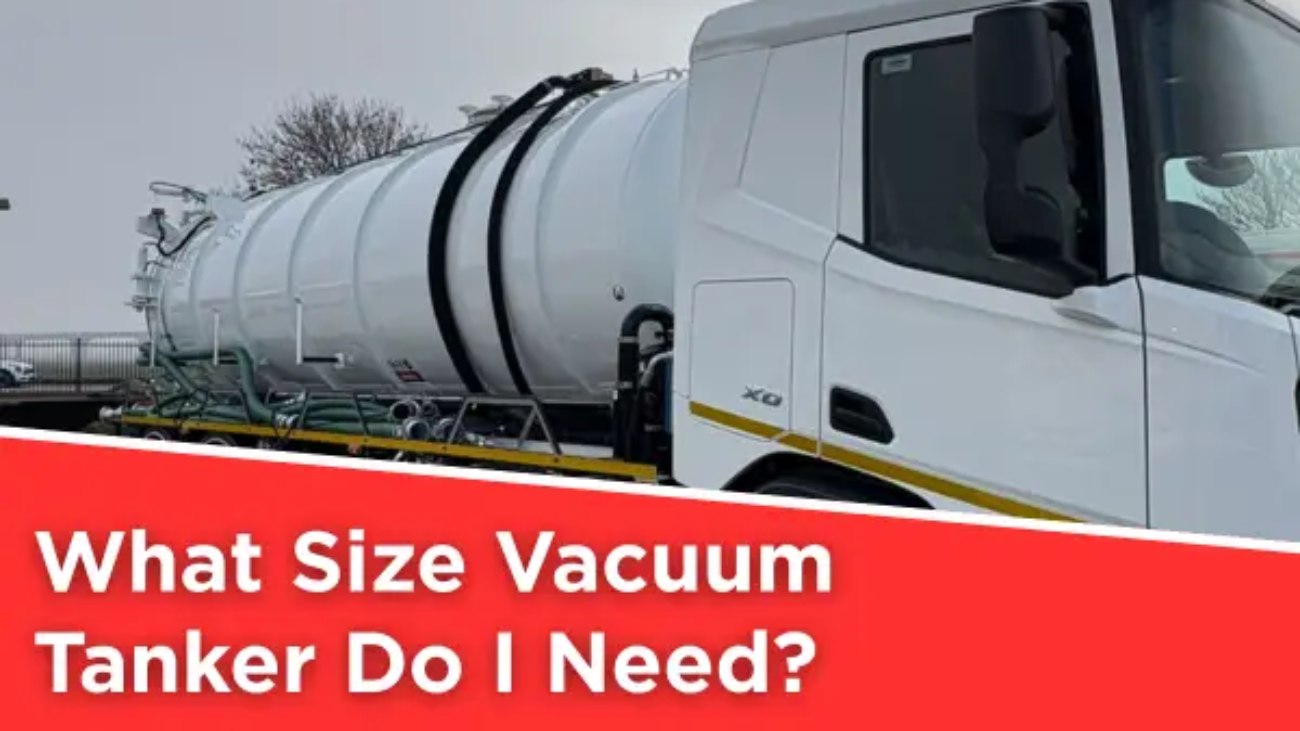
Choosing the right vacuum tanker size is one of the most important decisions when adding to or upgrading your fleet. The right setup can improve efficiency, reduce downtime, and make sure the vehicle suits the type of work you’re carrying out day to day.
In this guide, we break down the most common tanker sizes and where each one fits best.
Common Vacuum Tanker Sizes
Most vacuum tankers fall into three main categories:
- 2,000 gallon tankers (approx. 9,000 litres)
- 3,000 gallon tankers (approx. 13,500 litres)
- 4,000 gallon tankers (approx. 18,000 litres)
Each size has its own advantages depending on workload, access and operating environment.
2,000 Gallon Vacuum Tankers
Smaller tankers are ideal for:
- Urban work with restricted access
- Domestic and light commercial jobs
- Sites with weight or space limitations
They are easy to manoeuvre and well suited to tighter environments. The trade-off is reduced capacity, which means more frequent trips to discharge.
3,000 Gallon Vacuum Tankers
A 3,000 gallon tanker is often the most versatile option.
Well suited for:
- General drainage work
- Septic tank emptying
- Interceptors and grease traps
- Mixed domestic and commercial jobs
This size offers a strong balance between capacity and manoeuvrability, making it a popular choice for operators covering a wide range of work. It’s also the size many businesses move to when scaling up from smaller units.
4,000 Gallon Vacuum Tankers
Larger tankers are designed for higher volume work, including:
- Industrial and commercial contracts
- Long-distance jobs where fewer trips are important
- High demand workloads where efficiency is key
These units maximise productivity, but they do require more space to operate and may not suit tighter sites.
What Should You Consider?
Before deciding on a tanker size, it’s worth thinking about:
- The type of work you carry out most often
- Access to sites and working environments
- Distance to disposal points
- Payload and efficiency requirements
- Future plans for your business
The right tanker isn’t just about size – it’s about how it fits into your day-to-day operation.
Final Thoughts
There’s no one-size-fits-all answer when choosing a vacuum tanker. The right setup depends on your workload, the type of work you undertake, and the access and space available on site.
Looking for a Vacuum Tanker?
At Hopdeals, we stock a wide range of vacuum tankers for sale, including both new builds and quality used vehicles sourced directly from councils and major operators.
With over 30 years of experience in specialist vehicle sales, we can help you choose the right setup for your operation – whether that’s a compact unit for tight access or a higher capacity tanker for demanding work.
👉 Browse our latest new vacuum tankers for sale
👉 Or get in touch with the team to discuss your requirements
